Zip Happens: Tales from the Back of the Dress
Sisterhood, gala dresses, and the burden of back zippers

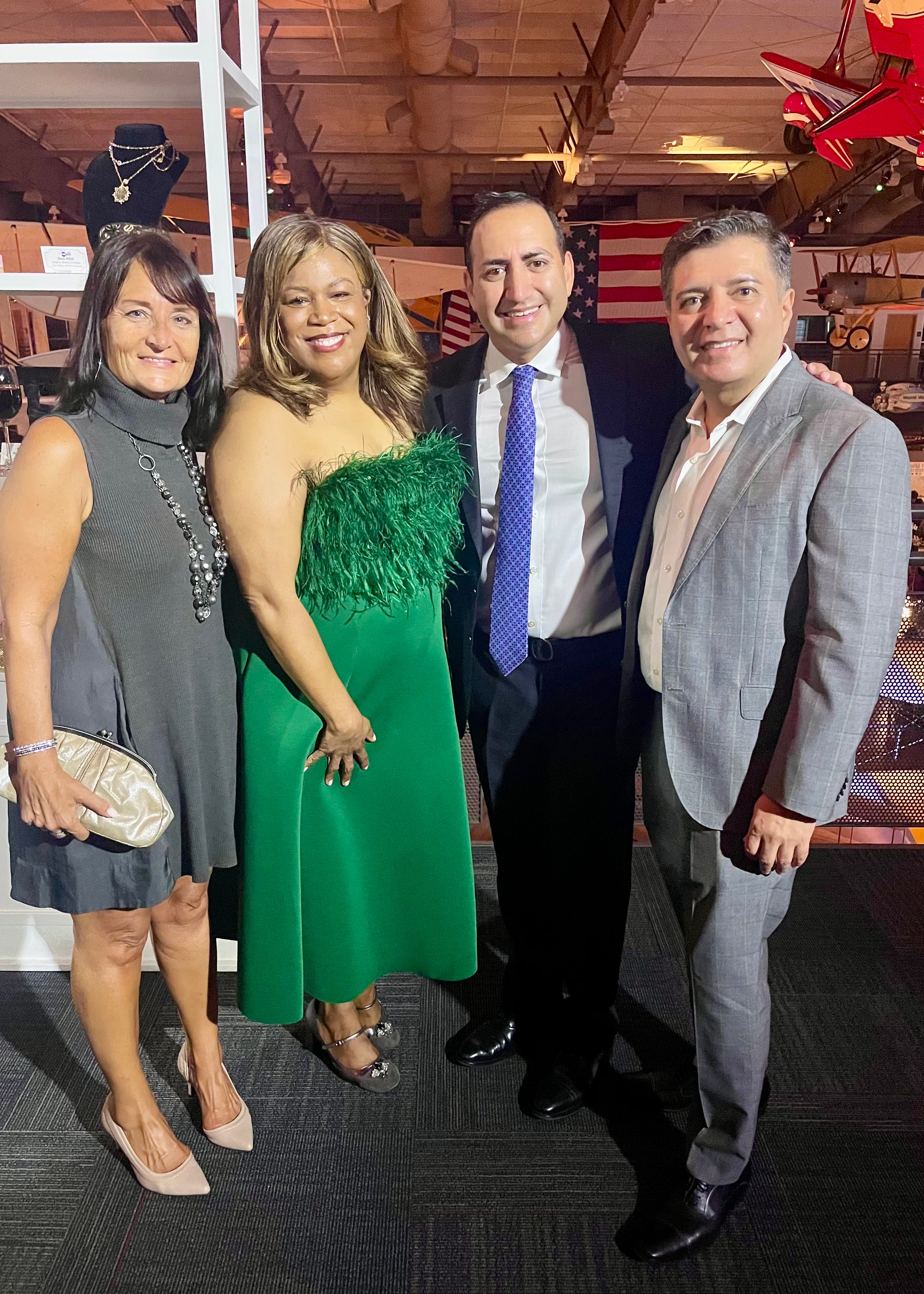
In September I attended Fur Ball, the SPCA of Texas’s annual fundraising gala. A fun (puppies!) and inspiring night for sure, it was women’s fashion that stole the show for me. Not its style, elegance or glamour—although there was plenty on display. Or the impossible beauty standards fashion sometimes promotes. Instead, what I’ve been contemplating for more than a month is fashion’s accessibility problem.
As I waited near the valet stand for my friends to arrive, a young woman approached and asked if I would zip her dress. Not able to reach, she drove to the event with her dress not fully zipped. At the end of the evening, again near the valet stand while waiting for my vehicle, another woman—this one middle aged—asked me for help. She requested I unzip her dress an inch or two so she could get out of the dress when she got home.
Twice in one night! Why is this happening?
Like Keri Russell’s character Kate Wyler in Netflix’s “The Diplomat” and the women at Fur Ball, I have struggled (sometimes mightily) to get into and out of clothing alone. I can’t imagine there are many women who have not. The first person to whom I mentioned this, owner of a women’s clothing boutique in Minneapolis, laughed out loud. She had literally just arrived at a friend’s home with—you guessed it—her dress unzipped. This is reality for those of us who wear fashion designed for women.
But why? Why is clothing designed for everyday life that women can’t get into or out of without assistance? While true that more of us live alone than in the past, women have been dressing ourselves for an awfully long time. Shouldn’t the clothes we wear be accessible regardless of our living arrangements?
Turns out I’m not the first to ask. According to Amaia Odriozola, writing for EL PAÍS in 2023, the modern zipper was invented in 1913. “In the early years, zippers were used to close rubber boots and tobacco bags,” she notes. “It took almost two decades to convince the fashion industry that this novel closure had sensational potential.”
Ironically, a 1930s campaign for children’s clothing with zippers—side and front—promoted self-sufficiency: young children could now dress themselves with little help. Meanwhile, women’s clothing featuring side and front zippers was controversial: enabling women to undress more quickly might encourage promiscuity. Soon after, in the 1940s, women’s zippers moved to the back.
I am not suggesting a fashion conspiracy to keep women dependent on others. Today, back zippers are the norm, a bad habit that no longer serves us—and, perhaps never did. A norm that poses a legitimate handicap for women. Like the pink tax—goods and services for women priced higher than their equivalents for men—these disadvantages add up. (I am not aware of an equivalent intended for men; if it exists please share!)
In her book, “We Need to Talk: How to Have Conversations That Matter,” Celeste Headlee writes, “There are four sides to my body and three of them are absolutely perfect for seeing a zipper, getting a good grip on it, and zipping it up. So why? Why, in the name of all that is holy, do clothesmakers insist on putting the zipper on the one side of my body that I can’t see and can’t reach without engaging in extreme yoga? To me, this is a feminist issue.”
Back zippers are clearly not the most urgent issue facing women, our nation, or the world. But in the face of frightening polarization; warp-speed technological transformation, implementation and reliance; and fundamental disagreements about democracy, identity and American values, perhaps it’s a simple, less fraught place to start. Instead of another season of trends, perhaps fashion needs a shift in perspective—one that values autonomy as much as aesthetics.
If the clothes we wear can make us feel powerful, beautiful, and seen, shouldn’t they also allow us to move, live, and dress ourselves without contortion or dependence.